Trump’s dangerous, unparalleled war on press ignores media’s crucial role
Get the latest Syracuse news delivered right to your inbox.
Subscribe to our newsletter here.
“Congress shall make no law abridging the freedom of speech, or of the press.”
These words are enshrined in the First Amendment to the United States Constitution. They establish a principle that’s shaped American media for two centuries: the government shouldn’t decide which voices and stories are worth hearing. Yet today, that principle is being challenged.
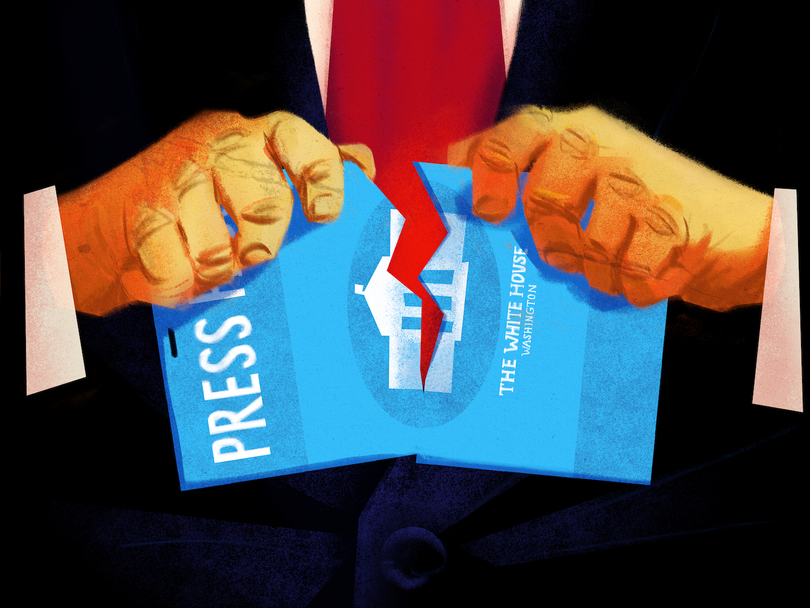
On Sept. 18, President Donald Trump issued a press ban on CNN, Politico and MS Now, barring them from accessing or covering the White House. Trump justified this measure by accusing these news sites of only reporting “fake news” and “lies.”
This action marked a drastic shift from common disapproval to outright prohibition. Presidents have fought with the press for as long as their relationship has existed.
John Adams used the Alien and Sedition Acts to silence critics of the federal government. Richard Nixon barred specific reporters from the White House for reporting on the Watergate scandal. Trump has spent years publicly criticizing news organizations and targeting individual reporters.
But this case is different. Trump isn’t simply criticizing outlets or people that cover him disfavorably. He’s using presidential access as leverage to win his battle against the media that rightfully checks his administration. Trump is targeting entire major news organizations for reporting stories he doesn’t like.
The problem is this ban sets a dangerous precedent: government access depends on whether the president approves of your journalism. If the presidency can pick which organizations get key information, what stops it from bullying journalists into writing positively to regain insider access?
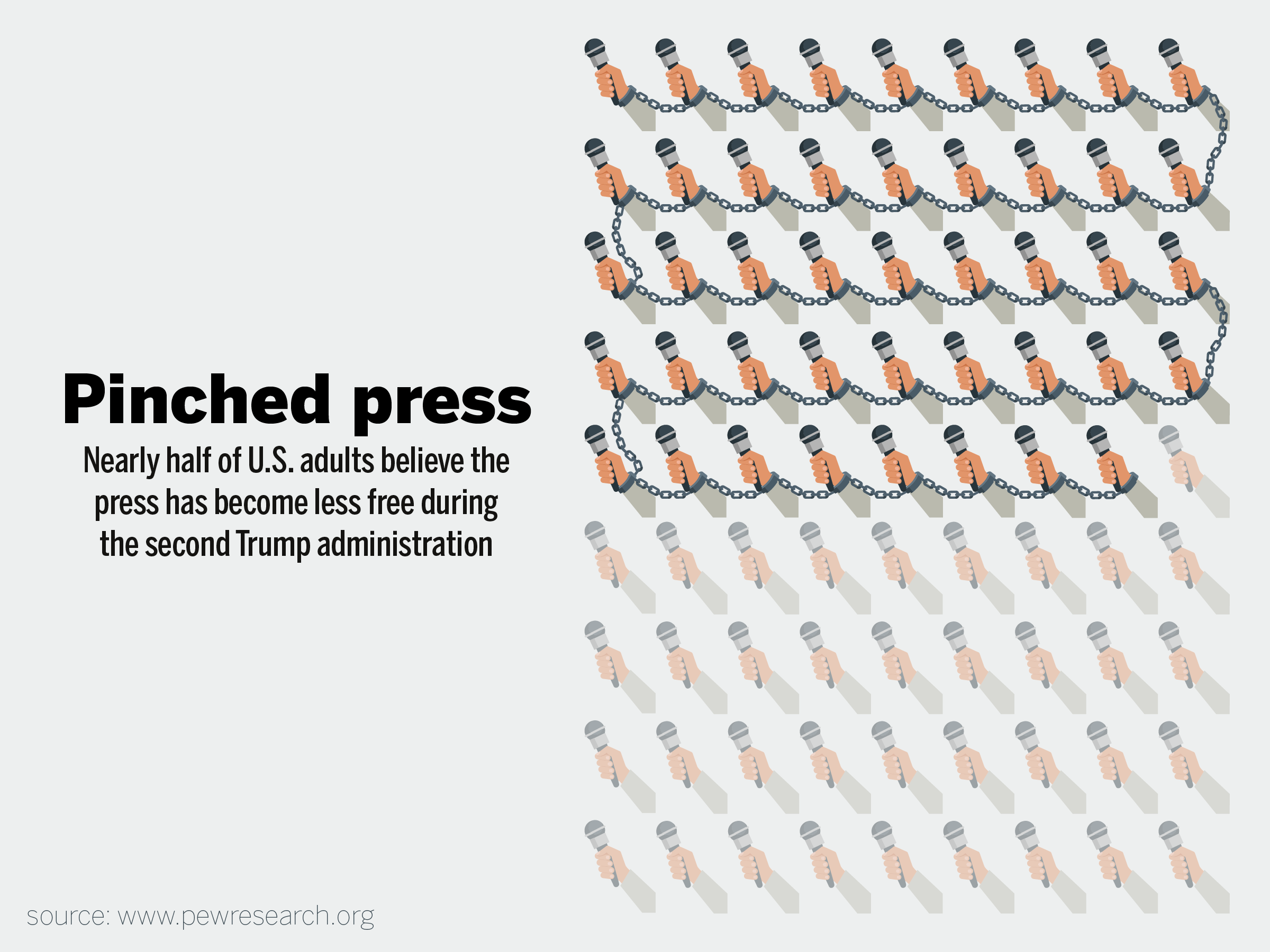
Abigail Aggarwala | Digital Design Director
Media networks weren’t content to let this precedent stand. On Sept. 21, the remaining major TV networks suspended their shared pool coverage of the White House. Consequently, these same networks filed a lawsuit against the Trump administration alleging a violation of the First Amendment. Trump’s actions didn’t just suspend coverage; they incited the largest collaborative boycott by media outlets in White House history.
The significance of this response goes beyond the boycott itself. Competing news organizations, from as conservative as Fox News to as liberal as ABC, put their foot down to take a stand against the president. This isn’t just an act of defiance, but a message that news organizations won’t stay quiet when freedom of the press is threatened.
Trump’s response to the ban was nearly as unprecedented as the act itself. The White House launched “Trump TV” in an attempt to bypass traditional coverage lines and keep eyes on the administration. Despite the network’s lack of success, it represents the first time the government has established a platform to control the exchange of information between itself and the public.
U.S. District Judge Timothy Kelly later ruled the administration must restore the banned networks’ credentials. Despite the ruling, White House officials continued to deny previously banned reporters. Before finally giving in, the White House was in direct contempt of a federal ruling.
The Trump administration and supporters of this ban call press access a privilege and argue the White House has authority to ban those it deems violate journalistic ethics.
This viewpoint fails to address that press access isn’t a retractable privilege; it’s an indelible right woven into the First Amendment, and the very fabric of what America stands for. The president may have the right to his White House, but he doesn’t have the right to censor the instruments designed to keep him in check.
For as long as the Constitution has existed, the U.S. Congress and U.S. Supreme Court have been viewed as mechanisms of control on the presidency. Yet the greatest restraint on the president isn’t these two branches; it’s transparency between the people and government. By attempting to tailor the press pool to his liking, Trump isn’t only curbing the intrinsic rights granted to these agencies — he’s attempting to usurp the public’s ability to hold its leaders accountable in a way no other president has.
Trump isn’t the first president to battle the press, nor will he be the last. But he’s the first to wage war on the media until the principle of a free press itself is at stake. The hold on the ban is temporary, and only the courts will ultimately determine how far the administration can go. But one distinction should remain clear: The press doesn’t exist to serve the president; it exists to serve the public. And when one man decides which voices deserve to be heard, that line is forever blurred.
Jude Magnotti is a freshman majoring in public relations and political science. He can be reached at jpmagnot@syr.edu.