Syracuse International Film Festival screens global films at local platforms

Get the latest Syracuse news delivered right to your inbox.
Subscribe to our newsletter here.
About 250 miles from the New York Film Festival in New York City and 2,500 miles from the AFI Fest in Los Angeles, Syracuse lacks its own major studios. For some local cinemagoers like Michelle DiBernardo, access to exclusive films is almost out of reach in Syracuse.
Although not every filmmaker at the festival has ties to the city, the Syracuse International Film Festival provides a shared space for dialogue through global film.
“It’s home. It’s important. We want the community to come see,” DiBernardo, director of Syracuse International Film Festival, said.
The 23rd Syracuse International Film Festival ran Thursday through Sunday, continuing its tradition of bringing international and local filmmakers together The four-day festival was held at the Catherine Cummings Theatre in Cazenovia for the first three days before moving to Syracuse’s Palace Theatre on Sunday.
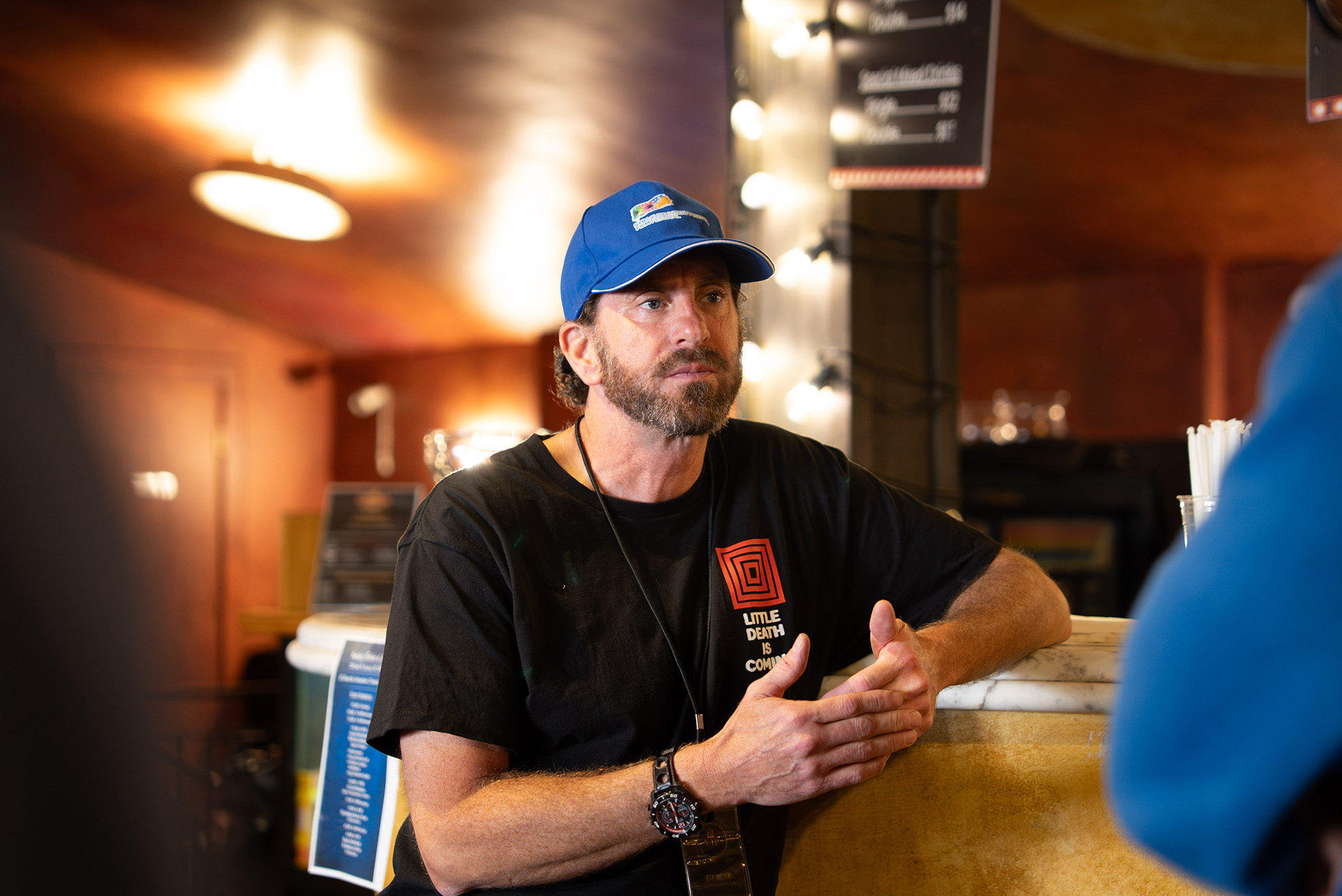
Syracuse International Film Festival board member Jeff Meyer stands inside the Palace Theatre during the festival’s 23rd edition. Meyer is one of four members serving on the festival’s board. Peter Shin | Staff Photographer
Throughout the festival, attendees could watch blocks of films organized by genre and participate in Q&A sessions with filmmakers like Christopher Mormando.
This year’s lineup, which consisted of “Judge No Book,” “Waska” and “Dobrina,” explored subjects ranging from mob dramas and Indigenous identity to the criminal justice system.
With hundreds of films submitted each year, DiBernardo and her team spend months choosing which ones to feature.
Six judges curate the selection, assessing submissions based on their quality and message. Projects ask Syracuse cinemagoers to consider new perspectives on life. This year, the festival received nearly 1,200 submissions across 25 different categories.
“I don’t really look at it like how the movie translates to Syracuse as a whole because Syracuse is its own thing,” festival board member Jeff Meyers said. “If you are comparing Syracuse to other things, you are not going to have much of an open mind because you have to look outside the box.”
The festival screened films from international directors from Hannes Rall and Lomai to local directors like Evan Bode and Marvin Wade. One animated film explored the experiences and reintegration of a formerly incarcerated person.
Part of the festival’s Indigenous film programming, “Seeds We Bury,” is a documentary directed by Olivia Hansen and Soledad Robin. Through interviews with community members and leaders, the film navigates the relationship between Indigenous individuals and their ancestors.
As one of the festival’s featured films, “Spheres” by German director Martin Gerigk won Best Experimental Short. Moving from the microscopic to the cosmic, the film explores the expanding spheres that make up the universe.
Gerigk, who lives in Germany and couldn’t travel to this year’s festival, said each sphere represents relationships between people. As the spheres converge, they mirror the intersections of different lives and worlds, expanding beyond the individual into a broader perspective, he said.
“A cell, a person, a city, or a machine can only be understood through its connections,” Gerigk said. “For me, showing the film in Syracuse means bringing that very personal way of perceiving the world into a shared space.”
WHAT YOU SHOULD READ NEXT
Jack Auger always loved watching movies. Syracuse will soon view his.
Syracuse University graduate student Jack Auger will be premiering his short film, “Bright Future,” at the first annual SASFest this Sunday.
The festival strongly upholds the co-existence between the filmmakers and cinema goers while not imposing upon shared, narrative experiences. Syracuse’s identity exists as a conduit of its individual stories and experiences.
“We’re community driven. We are here for the community. We want to collaborate with the community.” DiBerando said. “It’s home. It’s important.”
The festival also recognized filmmakers and industry professionals with several awards. Actor Arian Moayed received the Sophia Award, the festival’s lifetime achievement honor. Moayed has appeared in the Marvel Cinematic Universe‘s “Wonder Man” and HBO’s “Succession.”
Mac Cushing, the owner of Salt City Grip, also won the Lumen Award, dedicated to local professionals who have left a legacy in the Syracuse entertainment industry.
Likewise, “Complicated” was awarded best documentary feature. It follows the lives of patients with Ehlers-Danlos syndrome.
“There’s some powerful, different pieces,” DiBernardo said. “I think ‘Complicated’ should be shown to everyone.”
DiBernardo said the film festival is crucial to expanding the tastes of the Syracuse community that otherwise wouldn’t know about these filmmakers.
Despite Syracuse’s smaller film community compared to other cities, DiBernardo remains confident the Syracuse International Film Festival will be a home for quality world cinema, as curation for next year’s festival has already begun.
“Big things are coming,” DiBernardo said.