College is full of social avenues. Don’t let FOMO pressure you to party.

Have you had an experience with Syracuse University’s Title IX office? Share your story with The Daily Orange’s anonymous tip line.
Long before students set foot on college campuses, they’re bombarded by the sensationalized, almost mythological depictions of college life: the ragers, the alcohol, the downright unhinged nature of a sudden life on your own.
From pop culture portrayals to accounts from friends, we’re trained to idealize college as the ultimate place to embrace independence. Yet, that freedom to let loose also puts pressure on students who don’t want to party, leaving many dissatisfied with normal experiences that don’t resemble the glamorous version of college they expect.
Syracuse University has long been known as a premier party destination. Niche just ranked SU among the top 15 party schools in the nation. While this culture shapes many students’ social identity, it can also leave those who don’t participate feeling like they’re missing an essential part of college.
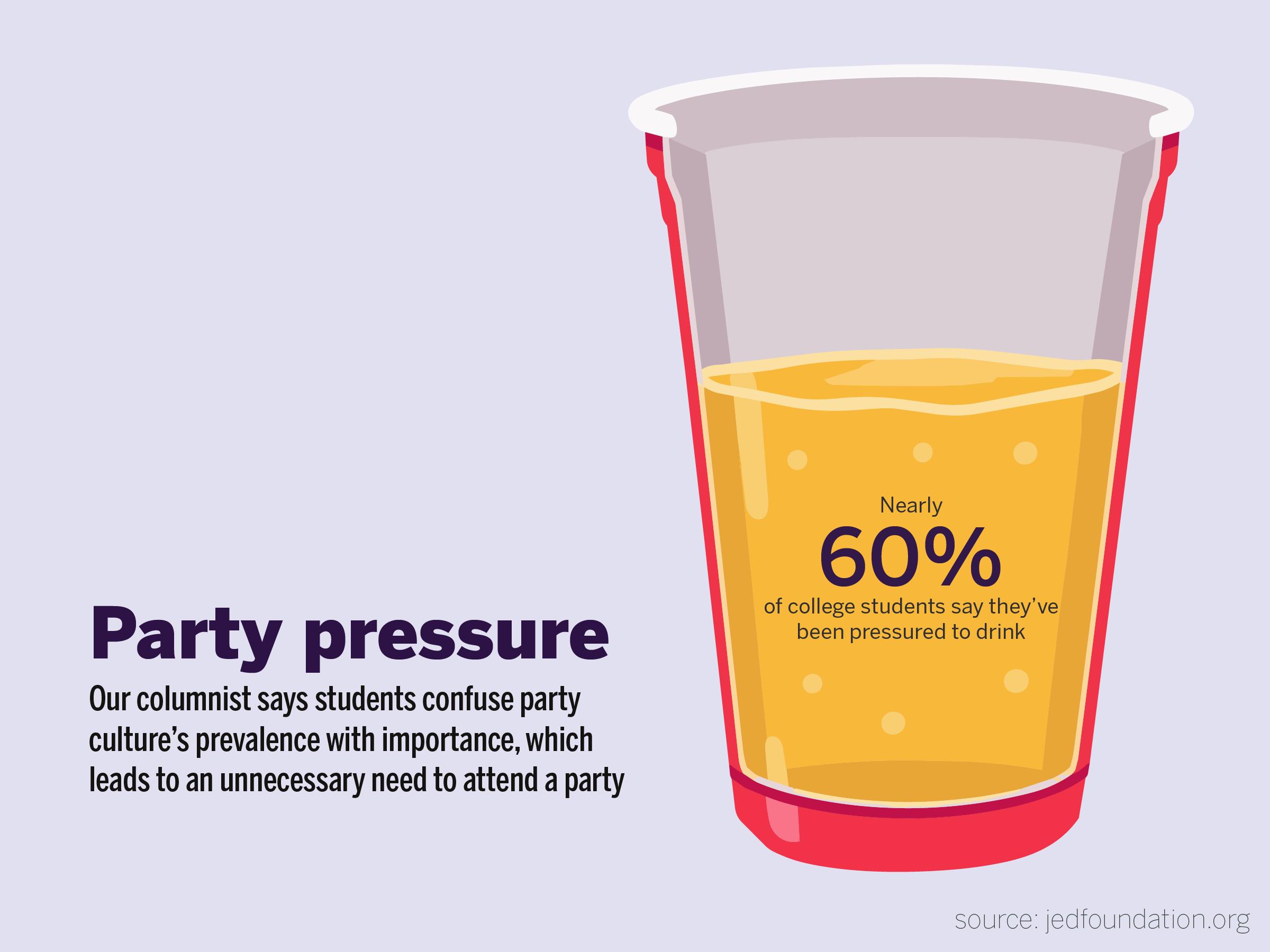
Because party culture is so visible, students often confuse its prevalence with its importance. This mindset creates unnecessary pressure to participate in an environment that can be overwhelming and, at times, dangerous, turning what should be a personal choice into a social commitment.
One major concern with this environment is personal safety. Binge drinking, drug abuse and the risk of sexual assault can make parties dangerous, particularly for young women. Crowded social atmospheres can create pressure to engage in behaviors students might normally avoid. While students can attend parties responsibly, no one should feel obligated to enter an environment where their safety or boundaries could be compromised.
Alcohol consumption intensifies this pressure. It’s illegal for many college students, yet is inextricably linked with most party settings. This constant pressure to drink doesn’t just make those who abstain feel excluded; it forces many students to surrender their values in an effort to fit in. Instead of an individual decision, drinking becomes a requirement of social admission.
Party culture can also harm your academic performance. Hangovers, late nights out and a lack of sleep reduce productivity and make it harder to keep up with assignments or maintain a consistent routine. When social plans consistently take precedence over schoolwork, students risk sacrificing their long-term goals for short-term social validation.
Abigail Aggarwala | Digital Design Director
Money is another consideration. Many college students operate on tight budgets constrained by tuition costs. Transportation, food and entry fees can make frequent partying expensive. Your money is yours to spend, but it shouldn’t be wasted on an experience you feel compelled to take part in.
While glamorous on the outside, parties are often little more than standing around awkwardly with a red solo cup. Rather than using them as the definitive standard for social success, we must focus more on the quality of our interactions, the meaningful relationships we build and the memories we create with the people around us.
Whether it’s grabbing dinner on Marshall Street, dressing in all orange for a big sports game or walking around campus late at night with a friend, define how you want to embrace your college experience instead of surrendering to others’ expectations.
There isn’t anything wrong with partying. For many students, parties are an enjoyable way to unwind, meet new people and form lasting memories. But a social experience pursued out of FOMO rather than genuine interest is unlikely to provide the same fulfillment.
There’s no single way to have a rewarding college experience. For some, it means crowded parties and late nights; for others, it means getting involved in clubs and spending time with a close circle of friends. None of these experiences are more effective than another.
What matters isn’t the experience itself, but that you choose it. Spend college finding what makes you happy, not chasing an idolized version of fun. Because if college is truly about finding yourself, there’s no reason to lose yourself trying to fit in.
Jude Magnotti is a freshman majoring in public relations and political science. He can be reached at jpmagnot@syr.edu.