

T
HE NCAA’S HIRED MERCENARY parachuted in from Albany, dressed in attire that wouldn’t look out of place at prom: black suit, finely-trimmed beard, slicked-back black hair. In this courtroom, he stood alone. The opposing counsel, a three-man crew, sat to his right; the plaintiff sat behind them; and his inner circle sat behind him, watching intently as the judge asked Kevin Cannizzaro to explain why Amarri Monroe no longer has a right to play college basketball.
“I just felt bad for that lawyer,” said Edgar Glascott, Amarri’s godfather.
The argument was simple: Amarri played four healthy seasons — one at Wofford, three at Quinnipiac — which, in any year before the COVID-19 pandemic, would’ve been disqualifying. As of June 23, 2026, a new NCAA rule gives athletes five seasons in five years, but its transition provisions were specifically written to exclude athletes like Amarri — who were out of eligibility under the old framework — from using it.
But the counter might’ve been simpler: Amarri — a 23-year-old Syracuse forward — never relinquished his amateur status by signing a professional contract, and he’s still well within the cutoff set through Bylaw 12.6, the NCAA’s new age-based eligibility rule. More importantly, nowhere in the text of that bylaw does it explicitly state that class of 2022 athletes who have played four seasons aren’t eligible for a fifth.
“It’s a pretty simple bylaw,” said Dan Greene, one of Amarri’s lawyers. “Come to school, you get five academic years to play five years of sports.”
On Sept. 17, a rather dreary morning, Cannizzaro tried avoiding that fact, pointing to ancillary documents and saying the NCAA can determine its own rules. But the judge, Jean Marie Westlake, kept returning to the one question Cannizzaro couldn’t answer.
“Read me the plain four-corner language that says Mr. Monroe cannot play.”
He couldn’t do that, because such language didn’t exist. Cannizzaro couldn’t prevent Amarri from receiving the injunction keeping the NCAA off his back. During the hearing, after Westlake continued pressing him to explain why Amarri was ineligible, he told her she was undermining the NCAA’s position.
“Well,” Westlake said, sitting behind her bench. “Maybe it’s time for a change.”
Nineteen days later, Westlake signed her decision.
Twenty-six days later, Amarri played in a collegiate basketball game.
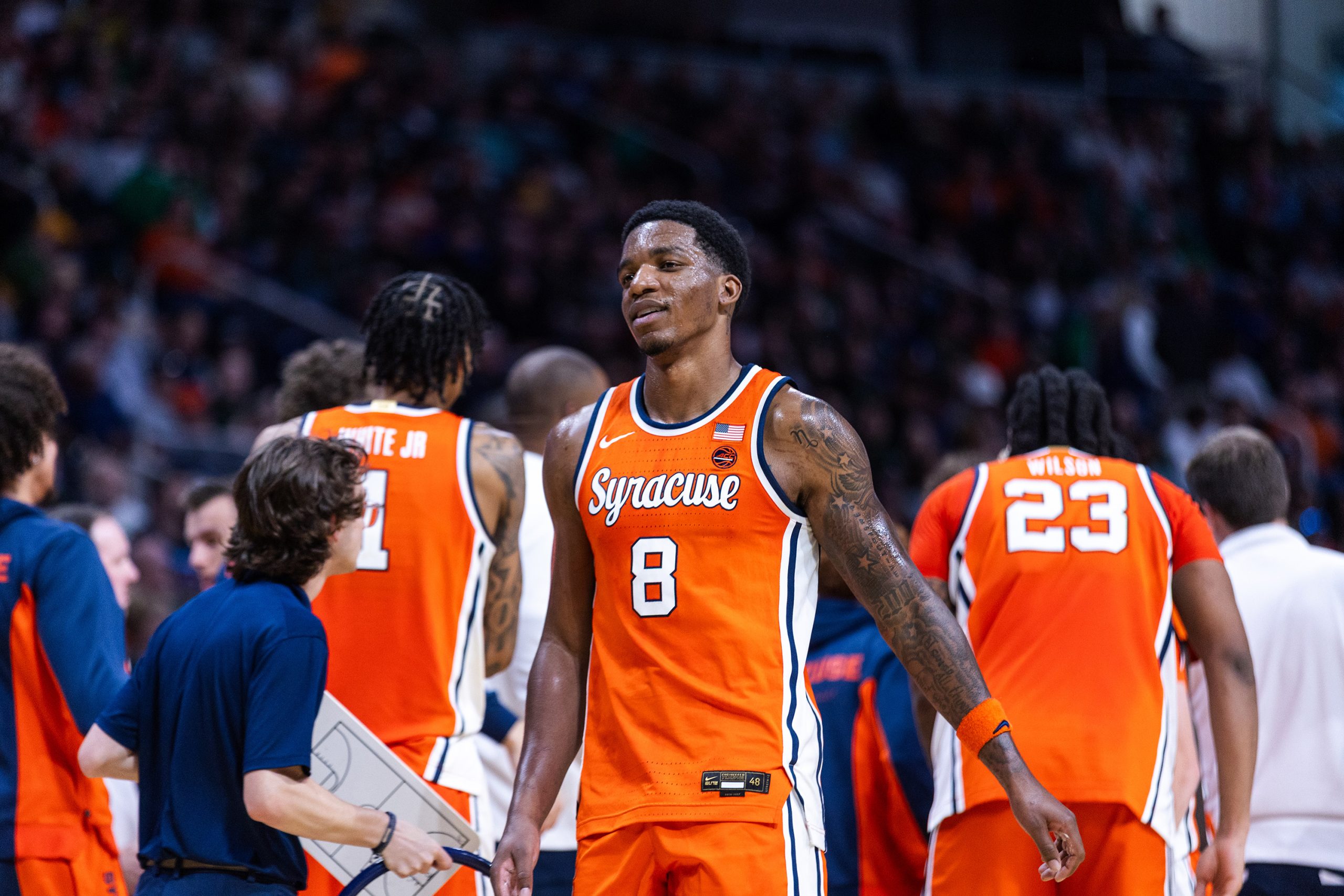
Amarri Monroe walks down Syracuse’s bench in SU’s exhibition win over Siena on Oct. 18. Monroe, a class of 2022 recruit, withstood a long legal battle for a fifth year of eligibility, which he’ll now use with the Orange in 2026. Zoe Xixis | Asst. Photo Editor
• • •
SOMEWHERE ALONG THE LINE, the NCAA messed up. It could’ve saved a lot of billable hours by including a provision specifically excluding student-athletes who graduated high school in 2022. It also could’ve waited until August to pass this resolution, when these players would’ve moved on with their lives, or simply given the class of 2022 a fifth year across the board.
Instead, the NCAA adopted this resolution on June 23 and paired it with a set of “transition provisions” found in an online press release, intended to guide its implementation. According to these provisions, athletes who used their last season of eligibility during the 2025-26 campaign — like Amarri — are supposed to receive “no additional eligibility.”
That didn’t stop Amarri from transferring to Syracuse on Aug. 4, and that’s how the NCAA found itself hiring lawyers like Cannizzaro to defend its new rule. Amarri, the 2025 Metro Atlantic Athletic Conference Player of the Year, is one of hundreds of athletes caught in this legal limbo. According to an Indiana court brief filed on Oct. 21, the NCAA is now defending itself in over 150 active cases involving more than 700 athletes nationwide.
On July 31, those athletes received a class-wide fifth year through an injunction granted in a case brought by Brock Wisne, a former Northern Colorado basketball player. But after that injunction was stayed on appeal, Amarri put together his own case.
“Before the whole Colorado case happened, I was just so focused on starting my pro career,” Amarri said. “Once they gave me a little bit of light, I was like, ‘OK, now I’m gonna picture myself playing the entire season.’”
About a decade ago, while attending Syracuse Law School, Greene became friends with Kevin Belbey. This past offseason, Kevin’s brother, Shaun Belbey, joined SU’s coaching staff as a video coordinator. Greene, who became a lawyer at Newman & Lickstein after graduating, reached out to congratulate him.
When it became evident Amarri needed his own case, Shaun gave him a proposition.
“Let’s talk with the staff, and see if there’s anything we can do for Amarri,” Shaun told Greene.
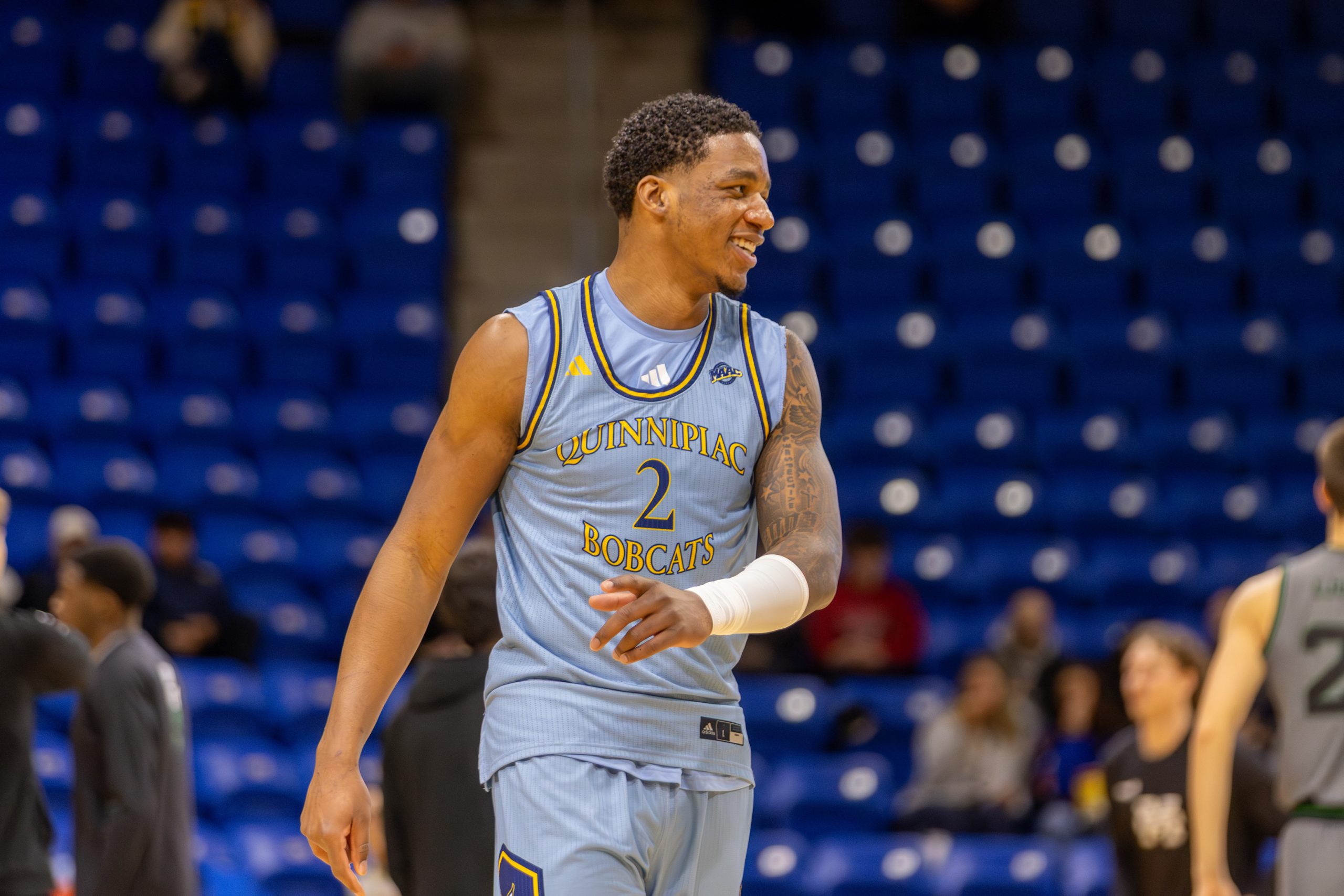
Amarri Monroe smiles donning his Quinnipiac jersey. Monroe spent three years with the Bobcats, earning 2025 Metro Atlantic Athletic Conference Player of the Year honors. Courtesy of Luke Krout | QBSN
As it turns out, there was plenty they could do for Amarri. Greene — alongside Dean DiPilato and Steven Eychner — began representing him soon after, and they filed their case on Aug. 31. It was built around two core arguments. The first is an antitrust claim, which DiPilato says is much harder to prove in court. It requires expert analysis defining an economic market, proof Amarri is affected by this market and evidence showing the NCAA is barring him from participating in it.
The second is a breach of contract claim, which DiPilato said they found in a complaint filed against the NCAA by Georgetown center Vince Iwuchukwu. He thought it was an interesting theory, one better suited for state-level courts than the antitrust claims other cases relied on.
The Division I manual, they argued, is a contract between the NCAA and Division I institutions. It decides which athletes can compete in Division I athletics and the rules under which they compete. Athletes don’t sign this contract, but New York state law allows third-party beneficiaries to bring breach of contract claims.
Greene argues all NCAA athletes are third-party beneficiaries of this contract, since the manual governs their lives. Thus, by preventing Amarri from playing under the Division I manual’s bylaw, the NCAA is breaching a contract to which he is a third-party beneficiary.
To win the injunction, Amarri’s lawyers had to prove two things: Amarri would suffer “irreparable harm” if it wasn’t granted, and they had a “likelihood of success.” The former was evident. If Amarri didn’t receive the injunction, he’d lose the season and his eligibility would expire.
The latter is where their arguments came in. If this didn’t land him an injunction, nothing would.
• • •
IT’S DIFFICULT TO EXPLAIN exactly why Amarri’s fighting so hard for this fifth year without explaining what happened to him at Wofford, and it’s difficult to explain what happened to him at Wofford because Amarri doesn’t talk about it. He’s never explained it to his mother, Yvetta Monroe.
“I don’t know exactly what happened there,” Yvetta said. “To him, it’s like a blocked memory.”
All Yvetta knows is that, in February 2023, Amarri returned to Newburgh, New York, and parked on her couch. Amarri wears his emotions on his face, she says, and the face he wore said it all.
His lips were stuck in a permanent pout. His teeth disappeared for months; no smiles, not even a smirk. His head — usually high atop his 6-foot-7, 225-pound frame — hung low. He was determined to quit basketball. He told Yvetta to burn his Wofford gear, but she never did.
“He was mentally drained,” Yvetta says, almost four years afterward.
Amarri always wanted to go to Syracuse. During his senior year at Newburgh Free Academy, SU’s coaching staff gave him a look but didn’t have a spot for him. He was told, if he took a prep year, they’d spin back around in 2022.
But after shipping off to Kent, Connecticut, for a postgrad year at South Kent School, that offer never came. He chose Wofford, setting into motion a freshman season so disastrous he tried filing a waiver that would’ve made it a redshirt year.
It began on Dec. 30, 2022, when Terriers head coach Jay McAuley resigned. Allegedly, McAuley required film studies and practices beyond the NCAA’s weekly 20-hour limit. “He would call you at 8 a.m. and ask you a question about film,” said Chase Martin, a former Wofford guard. “And some players didn’t like that.”
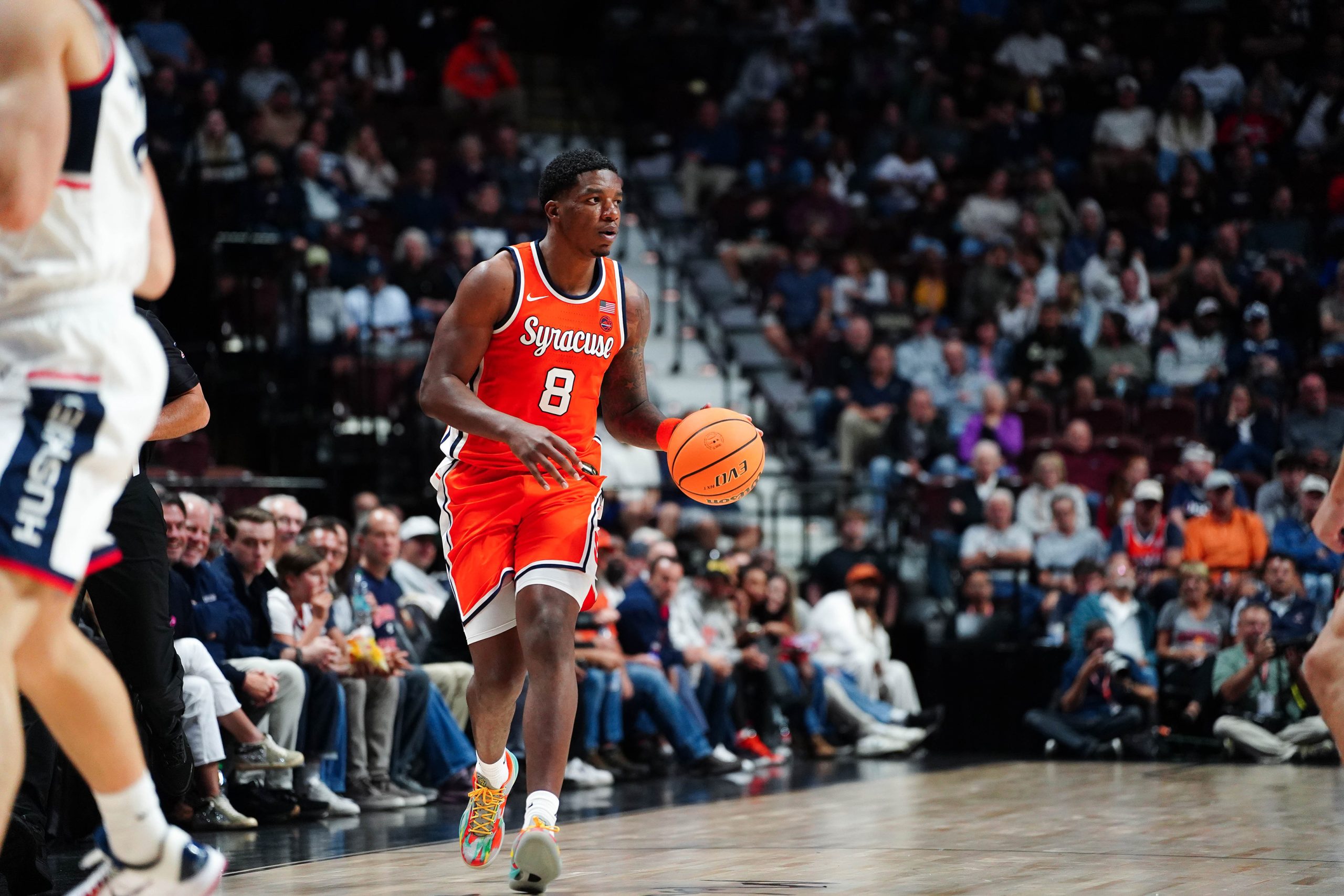
Amarri Monroe dribbles down the right wing in Syracuse’s exhibition loss to UConn on Oct. 13. Monroe transferred to Syracuse this offseason after one year at Wofford and three seasons at Quinnipiac. Zoe Xixis | Asst. Photo Editor
Around Christmas, Yvetta said, Amarri called her, telling her the Terriers were going on strike if McAuley was still coaching by New Year’s Day. The team got their way, and McAuley was replaced by associate head coach Dwight Perry in the interim.
Overall, Martin said Perry did a good job with the hand he was dealt. But at times, Martin added, Perry yelled at players, was sarcastic toward them and “got onto people.” Joe Spinelli, another Wofford guard, said he felt Perry sometimes “pushed the wrong buttons” with players. On several occasions, Amarri and Perry got into heated arguments during practice.
East Tennessee State, where Perry now coaches, did not respond to The Daily Orange’s requests for comment.
“The way I would put it is, if Coach Perry was the head coach that recruited us, would we have committed there?” Martin said. “I don’t know if we would have, necessarily.”
The final straw came a few days after Amarri’s best game of the season, an 11-point showing against Furman on Feb. 4, 2023. Martin doesn’t remember what Perry said to prompt it, but after another mid-practice argument, Amarri stormed out of the gym during a free-throw drill.
“He wants to be coached,” Glascott said about Amarri’s time under Perry. “He doesn’t need to be screamed at or disrespected.”
Soon after, Perry took the team to Hub City Scoops, a since-closed ice cream shop about a mile off campus. There, he addressed his players, discussing mental health and informing them Amarri was no longer with the team. “Coach’s heart was in the right place,” Martin said.
“But I think we all kind of thought it was corny.”
• • •
THE NIGHT BEFORE the hearing, Yvetta didn’t sleep a wink. Midnight came fast, and 5:30 a.m. came faster. The morning of Sept. 17, Glascott pulled into her driveway to pick her up at the crack of dawn, and found her trying to wrap her head around the same thought for hours.
Who goes up against the NCAA and wins in court?
She was about to find out. After making the three-hour drive to Syracuse, they watched Westlake pick apart Cannizzaro’s position at the hearing. At one point, she asked him to explain how the NCAA deems SU guard Gavin Doty eligible, for argument’s sake.
Cannizzaro replied: “Your Honor, I’m not familiar with Gavin Doty.”
Still, the hearing did nothing to ease Yvetta’s nerves. When she returned to Newburgh, she was up all night again, taking notes and trying to understand everything the judge said. Westlake told them a decision would come within 10 days, then blew through that deadline. Amarri wasn’t listed on SU’s roster yet. He couldn’t appear on its social media feeds, either.
“I was getting kind of ticked. I’m like, ‘Wait a minute, he’s part of the team.’” Glascott said. “And I think Amarri felt the same way, too. Like, ‘Do you want me here or not?’”
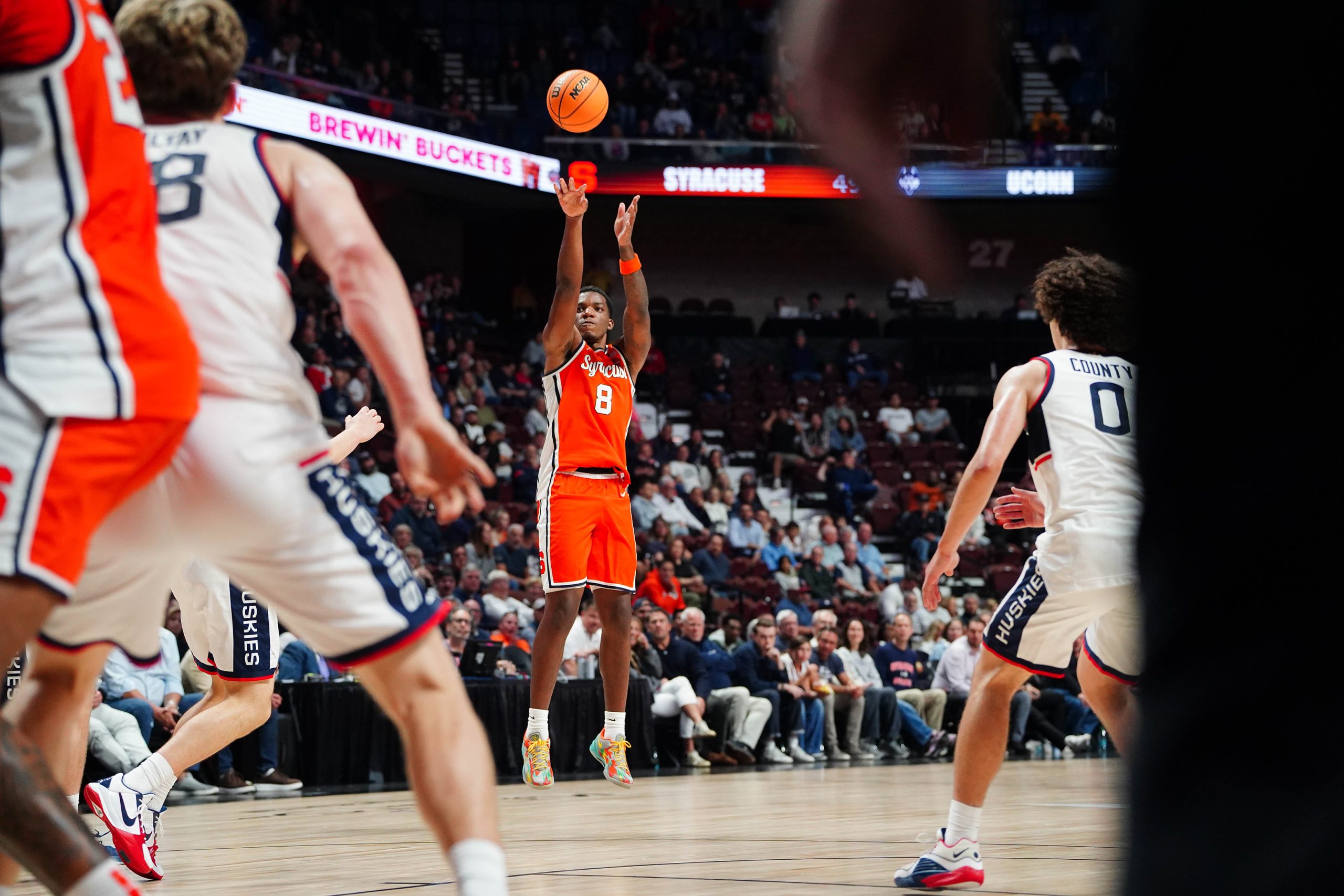
Amarri Monroe rises for a 3-point shot in SU’s exhibition loss to UConn on Oct. 13. Monroe, a New York native, scored nine points in the game, fulfilling a lifelong dream of suiting up for the Orange. Zoe Xixis | Asst. Photo Editor
Then the decision — and the injunction — came on Oct. 6. Two days later, Amarri took a picture of the JMA Wireless Dome, trying to soak it all in. It’s difficult for him to believe he’s here.
“Never, ever, ever in a million years did I think I’d be playing at Syracuse,” Amarri said.
A week later, Amarri played his first game for Syracuse, an exhibition against UConn. He was SU’s second-leading scorer, netting nine points in the 72-52 loss. There were stretches of good play, Syracuse head coach Gerry McNamara said, but he’s not in the elite condition that made him a star at Quinnipiac just yet. He’s been waiting for ages.
This was a moment years in the making. This was for the kid who voluntarily took on an additional year of high school, praying Syracuse would come with an offer. This was for the kid who was ready to quit basketball, only relenting because his mom would kick him out if he didn’t. This was for the kid who, last March, spent an eternity letting out heaving sobs in the locker room after his final Quinnipiac game, thinking he’d never do this again.
“Definitely surreal,” Amarri said, standing in a Mohegan Sun Arena hallway, searching for the words to describe how it felt to put on his jersey in the morning. “It just didn’t feel real at all.”
The NCAA could appeal his injunction, or it could decide not to and litigate the case to completion. If a court finds Amarri ineligible down the line, DiPilato says the NCAA cannot retroactively punish Syracuse for rostering him, pursuant to the injunction.
That’s about the only guarantee in this world. On paper, Amarri has a six-figure NIL contract, a scholarship, and an injunction telling him he can play. But all he really has is tonight, the dream he’s living each time he looks in the mirror, and the hope that he never has to wake up.
Photo by Tara Deluca | Photo Editor